
Lead-Acid vs Lithium Batteries for High-Mileage Electric Motorcycles
By E-Moto Launch · Updated July 7, 2026
Battery choice should follow the operating model. A lower purchase price helps only when the battery still supports the rider's daily work.
Lead-acid and lithium batteries both have a place in electric motorcycle projects. The problem starts when operators compare them only by the first quotation. A fleet may save money on the battery at purchase, then lose that saving through lower range, shorter service life, more charging time, or rider complaints.
The right battery depends on daily mileage, rider income, electric motorcycle weight, charging access, local repair skills, and the plan for scaling the fleet.
Need help shaping your pilot?
Share your rider use case, target fleet size, daily mileage, and battery plan. We can help you compare practical options before you commit to a larger order.
Plan Your Fleet PilotWhen lead-acid can make sense
Lead-acid batteries usually reduce the upfront cost of an electric motorcycle. In markets where purchase price is the main barrier, that can help an operator start a small fleet, test rider demand, or offer a lower rental price.
This option fits better when daily mileage is moderate, charging time is available, and local mechanics already understand the battery type. It may also work for projects where speed and range requirements are modest and the operator needs a practical entry point.
Where lithium has an advantage
Lithium batteries usually cost more at purchase, but they can reduce operating friction for high-mileage riders. They are lighter, often support longer cycle life, and are better suited to battery swapping systems. Lower weight also affects handling, acceleration, and rider fatigue.
For delivery and moto-taxi use, the value of lithium is tied to uptime. If a rider travels long distances every day, the business may recover the higher battery cost through more working hours and fewer battery replacements. The calculation should include the full battery life, not the first purchase alone.
Look at cost per working day
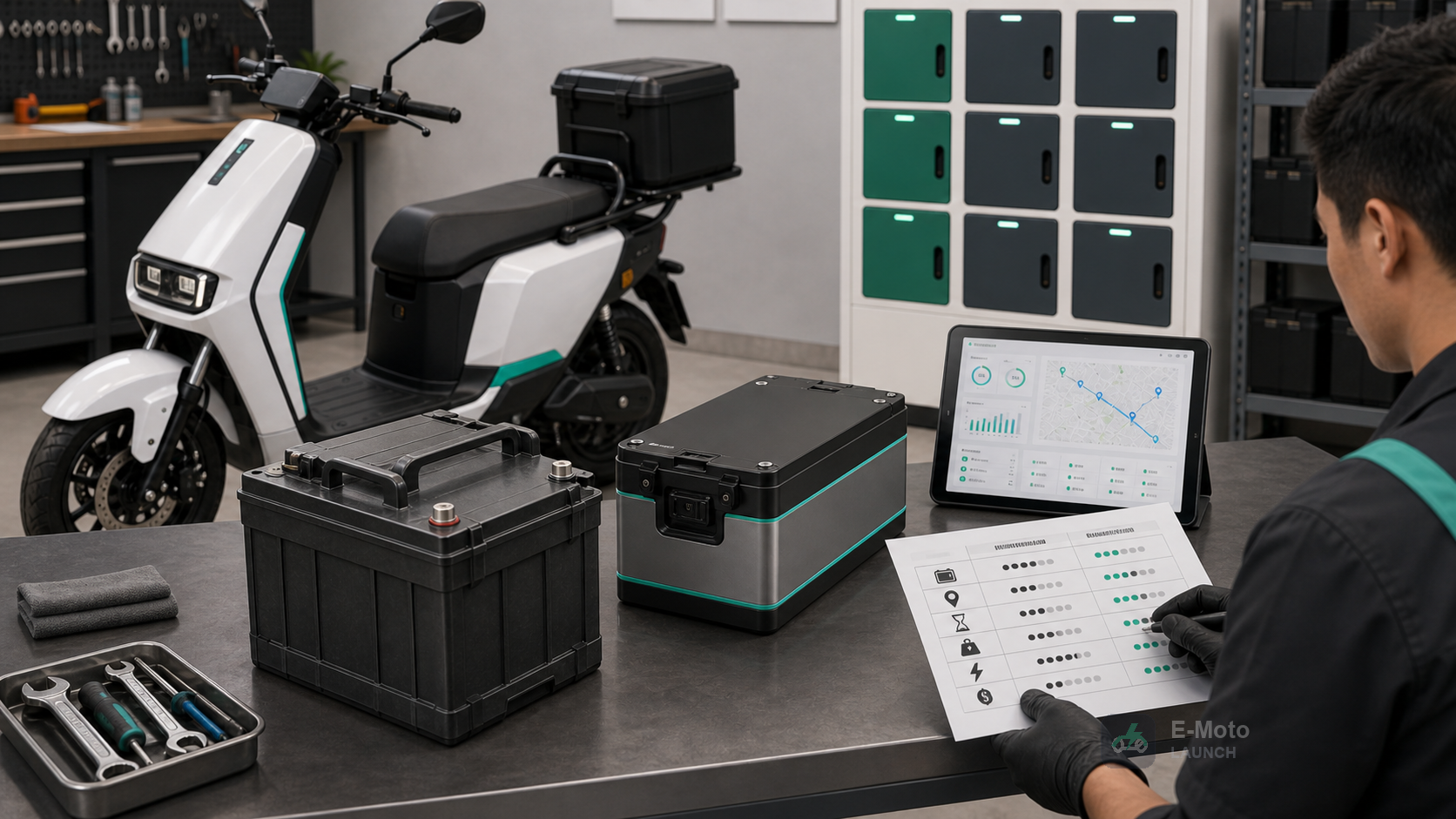
A simple way to compare batteries is to estimate cost per working day. That means purchase cost, expected cycle life, replacement timing, charging time, range loss over time, and the cost of any day the motorcycle cannot work.
A cheaper battery is attractive when it meets the route requirement and can be serviced locally. A more expensive battery is justified when it keeps the rider working longer and supports the operator's energy model.
Battery safety and management
Lithium projects need attention to cell quality, BMS design, charger matching, waterproofing, and battery housing. Lead-acid projects need clear rules for charging, replacement, and correct handling. In both cases, the operator should avoid mixing chargers, modifying wiring, or letting riders manage batteries without basic checks.
For rental and swapping models, battery identification matters. Operators need to know which battery belongs to which motorcycle, how often it is used, and when it should be inspected or retired.
A practical selection rule
Use lead-acid when the project needs a lower entry price and the usage pattern is controlled. Use lithium when the project depends on high utilization, lower weight, battery swapping, or a longer service life. For many operators, the best answer is not the most advanced battery. It is the battery that gives the rider enough working range at a cost the business can recover.
Battery Selection FAQ
Is lithium always better than lead-acid?
No. Lithium is often better for high-mileage and swapping operations, but lead-acid can still fit lower-cost projects with controlled mileage and available charging time.
What is the most important battery metric?
For commercial riders, cost per working day is more useful than purchase price alone because it includes range, charging time, replacement timing, and downtime.