
Charging vs Battery Swapping for Electric Motorcycle Fleets
By E-Moto Launch · Updated July 7, 2026
Charging is easier to start. Battery swapping can support higher utilization, but only when the operating details are planned.
Energy planning can decide whether an electric motorcycle fleet works in daily operation. The motorcycle may be suitable, the battery may be good, and the riders may like the product. Still, the project can struggle if riders cannot recharge or swap at the right time.
Most operators choose between two basic models: charging the battery in the motorcycle or swapping a depleted battery for a charged one. Each model has a different cost structure and management burden.
Need help shaping your pilot?
Share your rider use case, target fleet size, daily mileage, and battery plan. We can help you compare practical options before you commit to a larger order.
Plan Your Fleet PilotWhen charging is the better starting point
Charging is often the simplest way to begin. It needs fewer moving parts, fewer spare batteries, and less station management. It can work well when riders have predictable parking time, moderate daily mileage, or access to charging at home, a depot, or a rental location.
For early pilots, charging helps the operator learn how riders use the motorcycle before investing in cabinets and a large battery pool. The key risk is time. If riders need to wait during working hours, the lost income can become more expensive than the charger itself.
When swapping starts to make sense
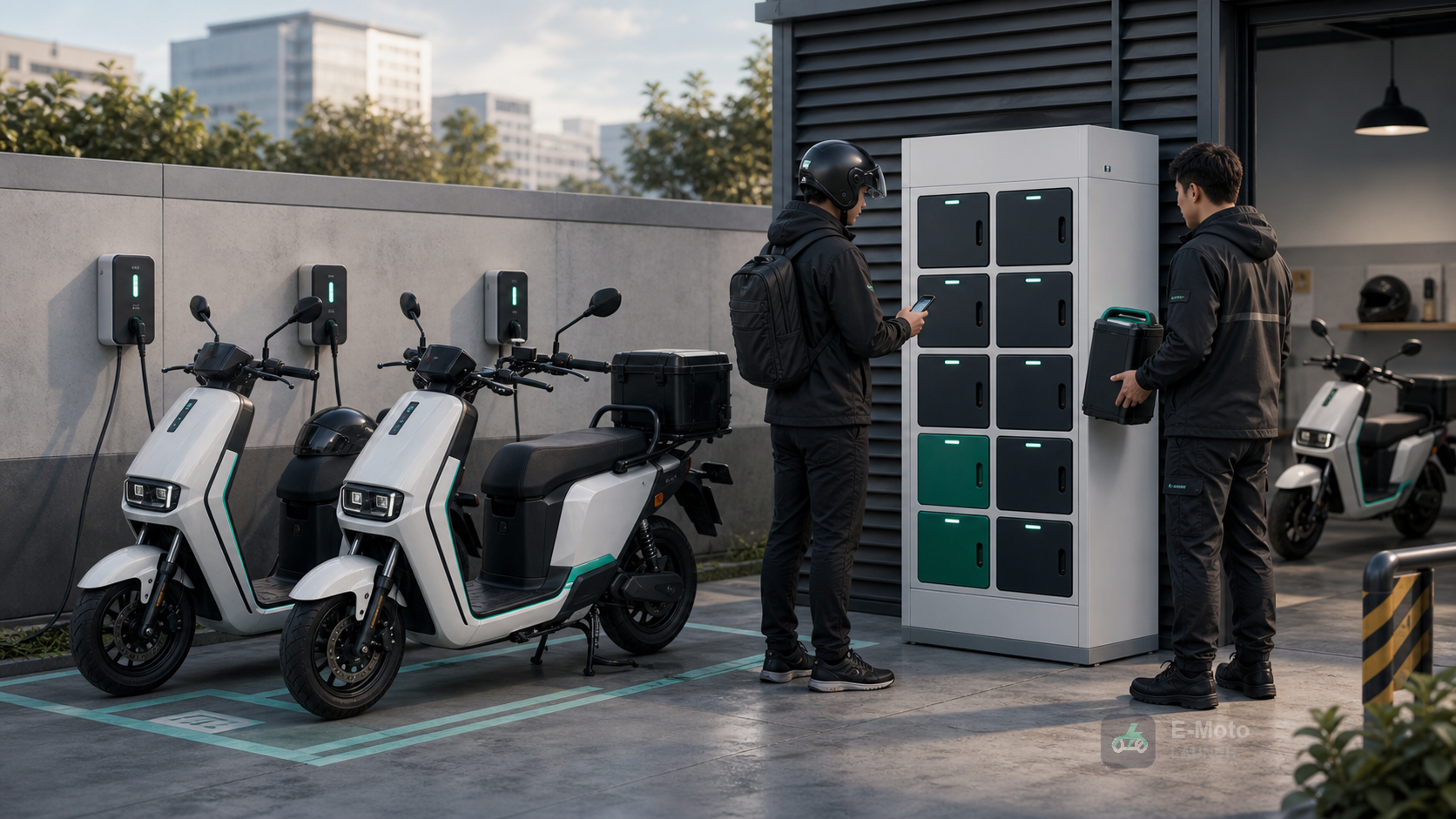
Battery swapping is useful when riders need to stay on the road for long shifts. Delivery riders and moto-taxi drivers may travel enough each day that waiting for a charge is not practical. A swap cabinet can reduce downtime if it is placed where riders already pass during work.
Swapping also helps the operator keep batteries under better control. The business can charge batteries in a managed cabinet, track usage, and replace weak batteries before they affect riders. This works only when the motorcycles, batteries, chargers, cabinet, and software are matched from the start.
The hidden work behind swapping
A swap cabinet is not enough by itself. The operator needs enough batteries in circulation, reliable power at the cabinet location, clear rules for rider access, battery identification, and a way to handle failed swaps or damaged batteries.
Cabinet size should match the pilot. A small project may use cabinets with fewer than 15 slots, especially during testing. Oversized cabinets can look impressive but may add cost before the rider flow is proven.
Location matters more than cabinet count
A cabinet placed in the wrong area will not help riders. Operators should map delivery zones, moto-taxi pickup points, rider parking areas, and common routes. The best cabinet location is usually where riders already stop, not where rent is cheapest.
During a pilot, one well-placed cabinet can teach more than several poorly placed cabinets. Usage data will show whether riders accept the process and whether battery stock is enough.
What to measure in a pilot
- Average swaps per rider per day
- Times when charged batteries are unavailable
- Battery failures, cabinet failures, and failed scan attempts
- Rider travel time to the cabinet
- Energy cost per kilometer
- Battery loss, damage, and replacement rate
A practical decision path
Start with charging if the fleet can operate around natural parking time. Test swapping when daily mileage is high enough that charging time affects rider income. For many operators, the best path is to begin with a controlled pilot, measure actual rider behavior, then decide how many cabinets and spare batteries the business needs.
Charging and Swapping FAQ
When does swapping become worth testing?
Swapping is worth testing when riders lose meaningful income during charging time or when the operator can manage battery standards, station access, and spare battery inventory.
Can one project use both models?
Yes. Some pilots begin with depot or home charging and add swapping for high-mileage riders, peak-hour routes, or locations where downtime is most expensive.