
Battery Swapping for Delivery and Moto-Taxi Riders
By E-Moto Launch · Updated July 7, 2026
Swapping can reduce downtime for high-mileage riders, but it works only when batteries, cabinets, locations, riders, and software are planned together.
Delivery and moto-taxi riders often earn by staying available. If charging takes them out of service during busy hours, electric motorcycles can feel risky even when the energy cost is lower than gasoline. Battery swapping addresses this problem by turning a long charge into a short exchange.
The model is not automatic. Operators need a controlled battery pool, cabinets placed near rider routes, clear access rules, and a software record for every swap. Without that discipline, swapping can become an expensive battery management problem.
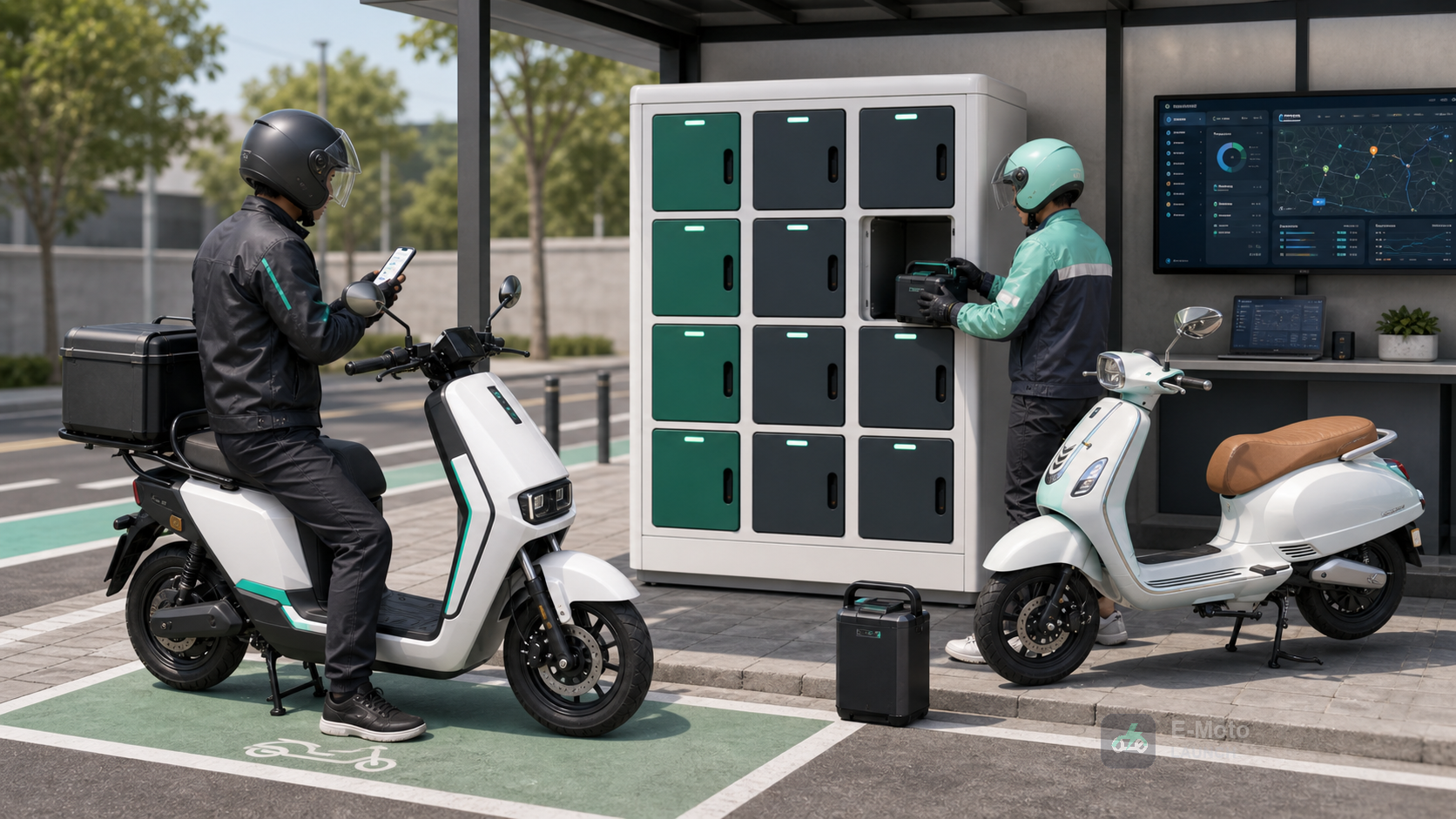
Where swapping helps most
Swapping fits riders who travel enough each day that ordinary charging interrupts income. Delivery riders may need quick energy access between order peaks. Moto-taxi riders may need to stay near pickup zones during commute hours. In both cases, the value is uptime.
A fleet with short daily routes may not need swapping. A fleet with high utilization, dense rider routes, and predictable station locations has a stronger case.
Testing a battery swapping model?
Tell us your rider count, daily distance, cabinet locations, and battery plan. We can help you shape a pilot before committing to a larger swap network.
Plan Your Fleet PilotCabinet placement is the first operating decision
A cabinet should sit where riders already pass or wait. Delivery operators can look at restaurant clusters, parcel depots, and rider rest points. Moto-taxi operators can look at stations, market areas, campuses, and pickup zones.
One well-used cabinet teaches more than several cabinets placed for convenience. During a pilot, the operator should measure how far riders travel for each swap and whether the location changes their normal earning pattern.
Battery pool size matters
A swapping system needs more batteries than motorcycles. Some batteries are in motorcycles, some are charging, some are ready in cabinets, and some may be under inspection. If the pool is too small, riders arrive and find no charged battery available.
Small pilots should begin with a simple ratio and adjust based on actual swap frequency. Cabinet size should also match the pilot. A cabinet with fewer than 15 slots can be enough to learn rider behavior before expanding.
Software keeps the system under control
Operators need to know which rider took which battery, when it was returned, whether the battery is healthy, and whether payment rules were followed. QR code access, rider accounts, cabinet logs, battery ID records, and alerts all reduce confusion.
The pilot should track failed swaps, empty cabinet events, battery faults, rider complaints, energy cost per kilometer, and cabinet utilization. These numbers show whether swapping is solving downtime or adding complexity.